Orion Constellation
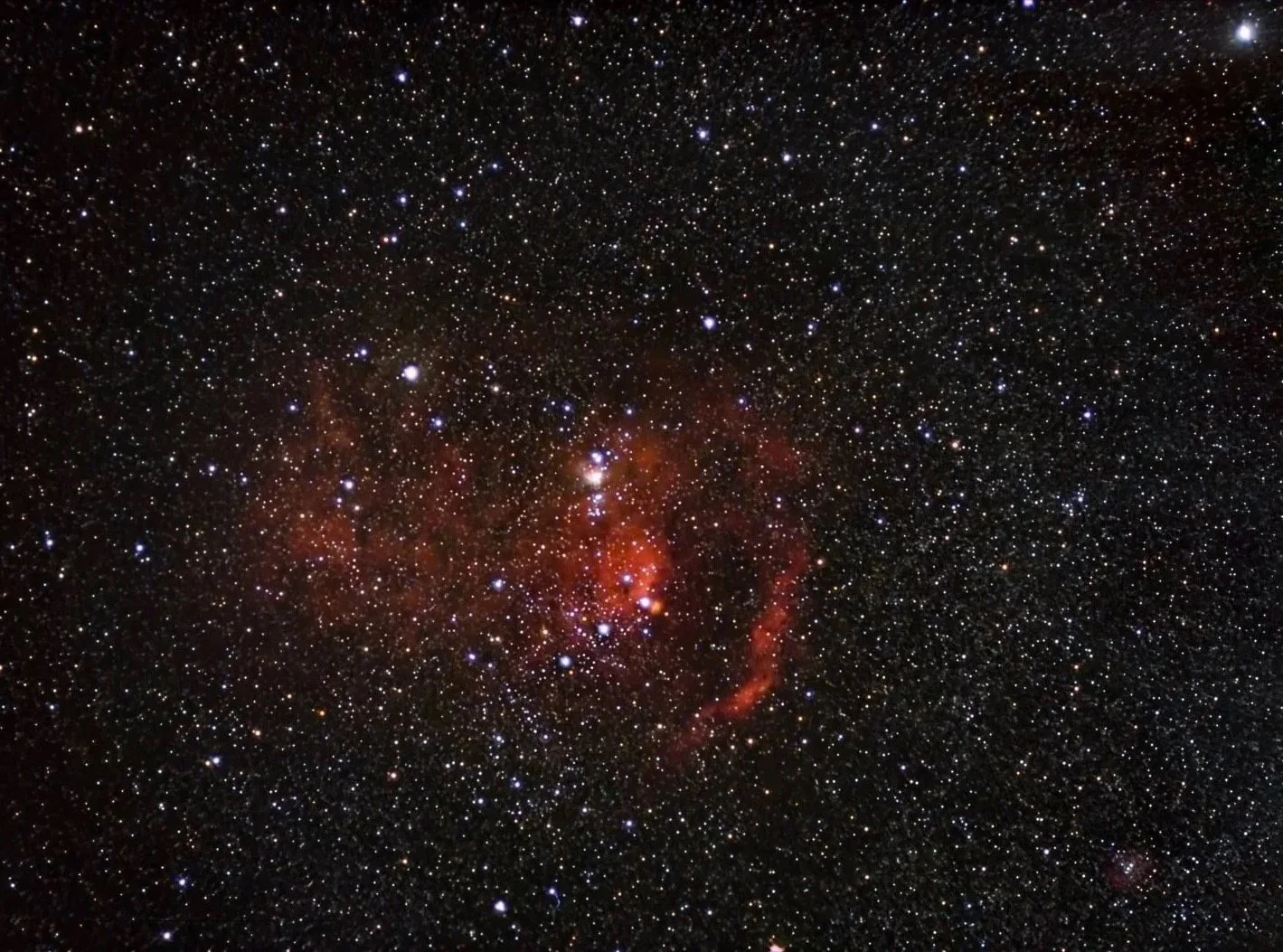
Orion Constellation
The Orion Constellation is easily visible with the naked eye. In Greek mythology, the constellation Orion represents a mighty hunter, often described as the son of Poseidon, whose arrogance or violence led to his death and placement among the stars, eternally pursuing the Pleiades, also known as the Seven Sisters; the Pleiades were the seven daughters of the Titan Atlas and the sea nymph Pleione, who were transformed into stars by Zeus to protect them from Orion’s relentless chase, a pursuit that still appears frozen in the night sky with Orion rising behind them but never catching them.
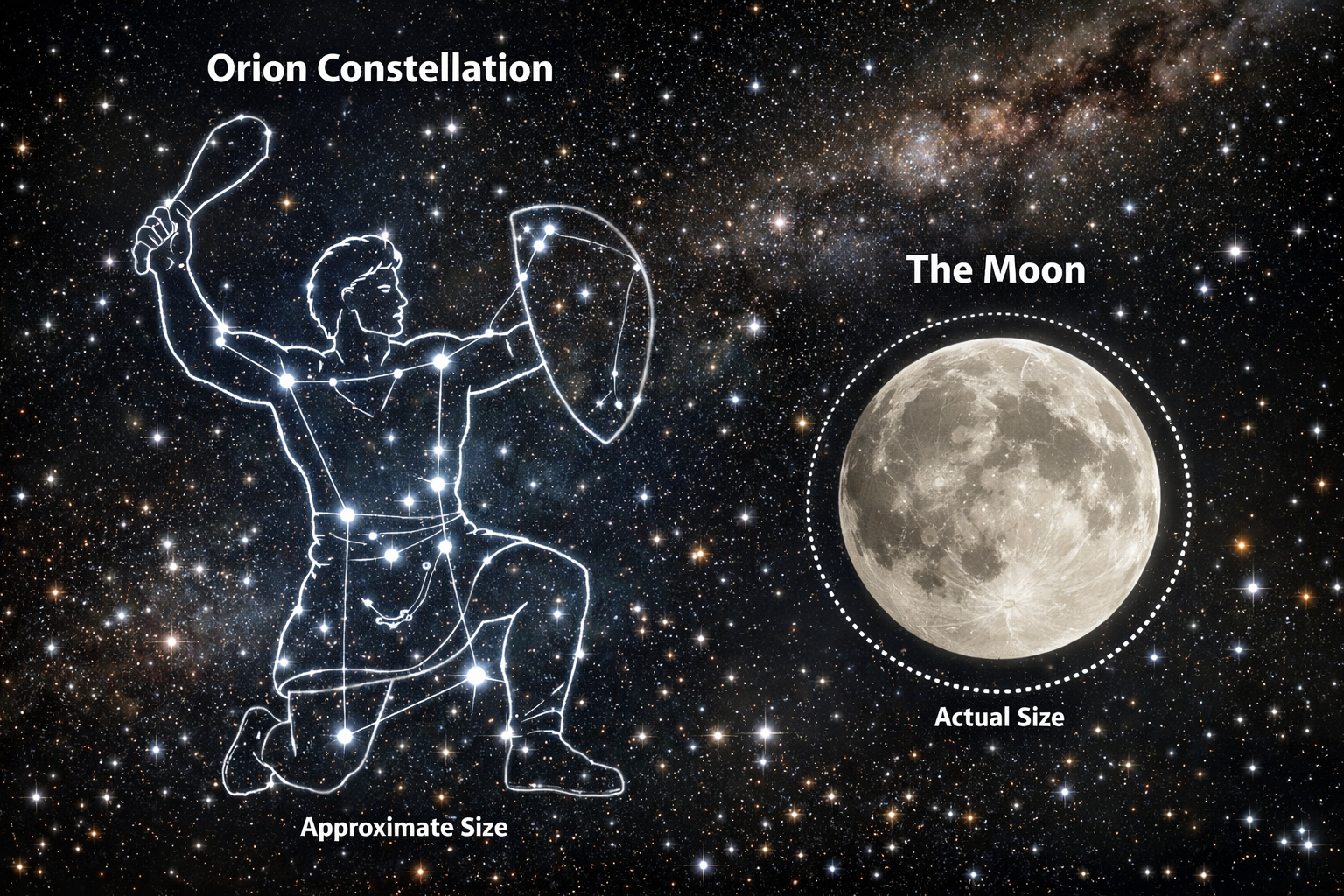
It is a fascinating and beautiful part of the sky, and massive in size. It is considerably larger than the moon and spans about 25º from top to bottom, represented in this image below.
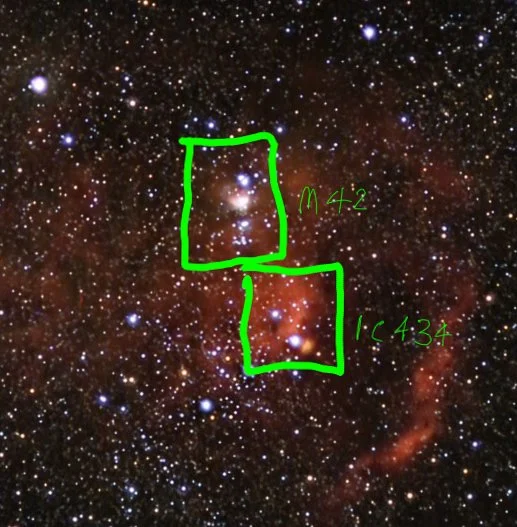
Orion has a number of points of interest throughout, including the famous Horsehead Nebula, or IC 434. Nearby, and just visible, is M42, or the Orion Nebula.
If it looks upside-down, blame physics and my location in the Southern Hemisphere. Flat Earth’s need not apply…
Below is a close-up of the image on the left, with M42 in the top left, and the Horsehead/Flame nebula with the star Alnitak.
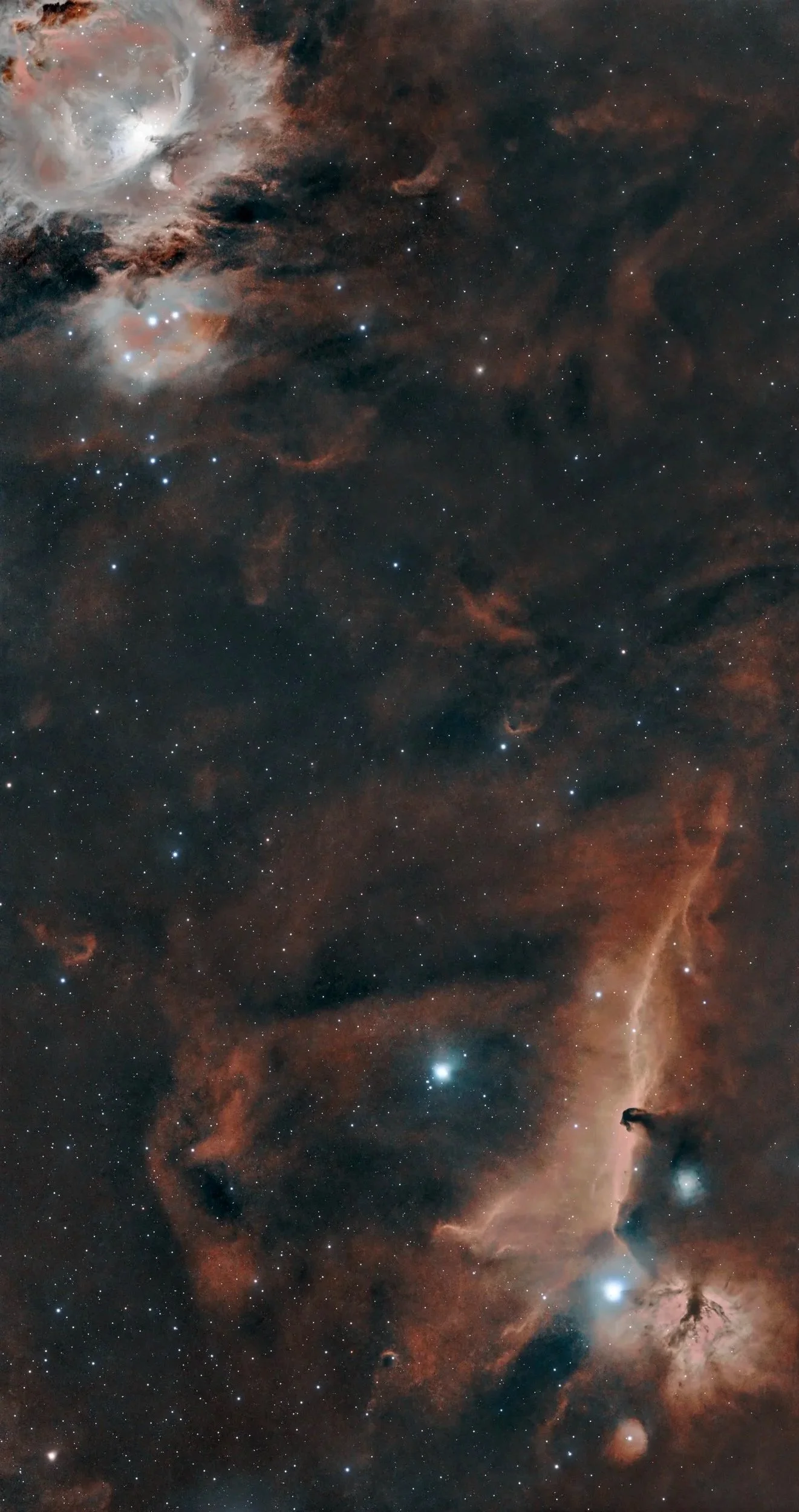
As you can see, the Horsehead Nebula appears as a dark silhouette in front of IC434, with the Flame Nebula stretched out below it, illuminated by the intense ultraviolet radiation from Alnitak.
M42, the Orion Nebula, and the nearby Running Man Nebula form the top part of the image. The Orion Nebula is a massive stellar nursery about 1350 light years (LY) away and is illuminated by the young Trapezium stars in the bright core.
The entire constellation is ringed by Barnard’s Loop, a faint, but massive ring of hydrogen gas that encircles the constellation and is about 300 LY across. This all makes up the even larger Orion-Eridanus superbubble.
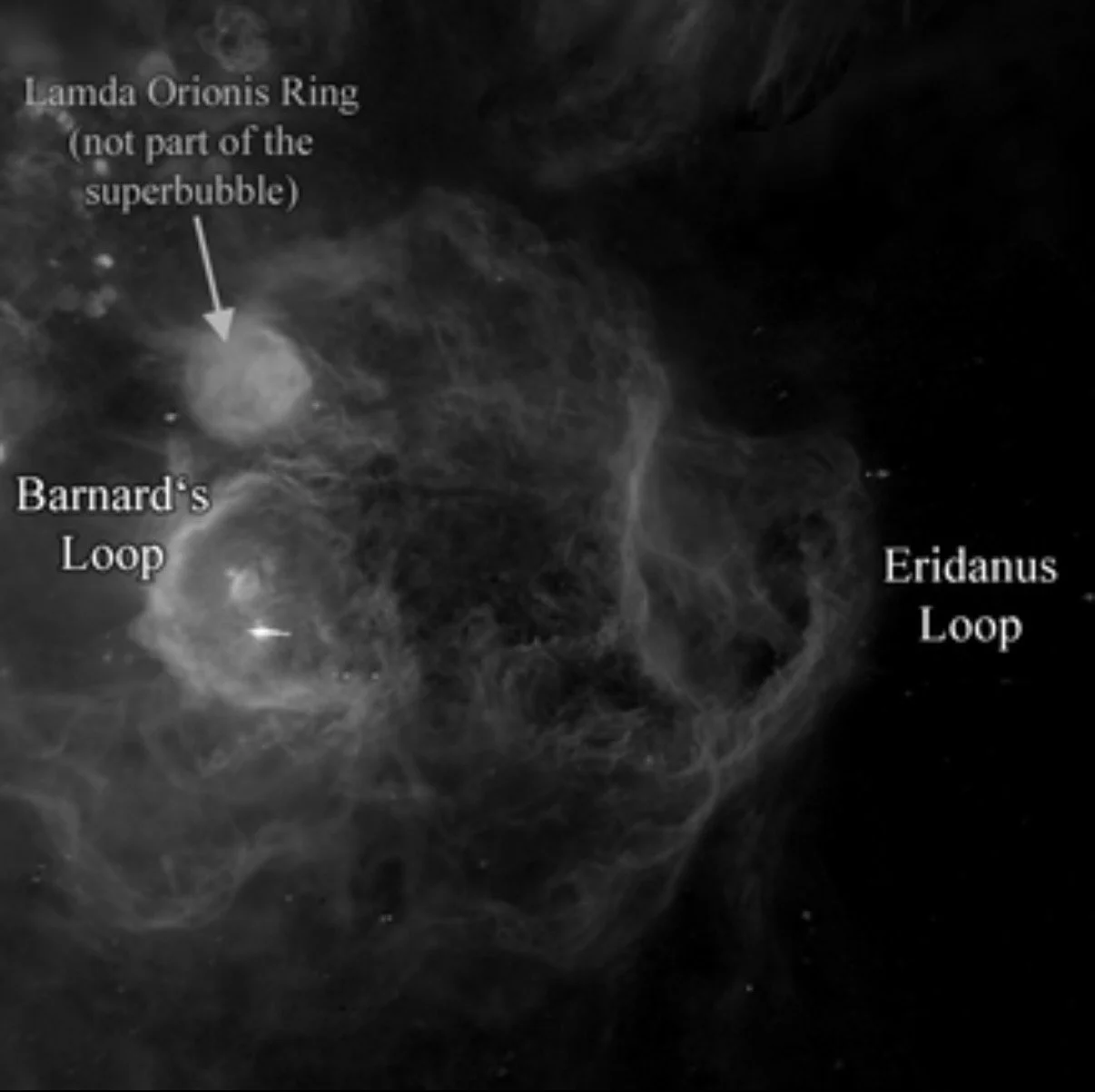
Barnard’s Loop and the Eridanus Loop forming the Orion-Eridanus superbubble