Crescent Nebula
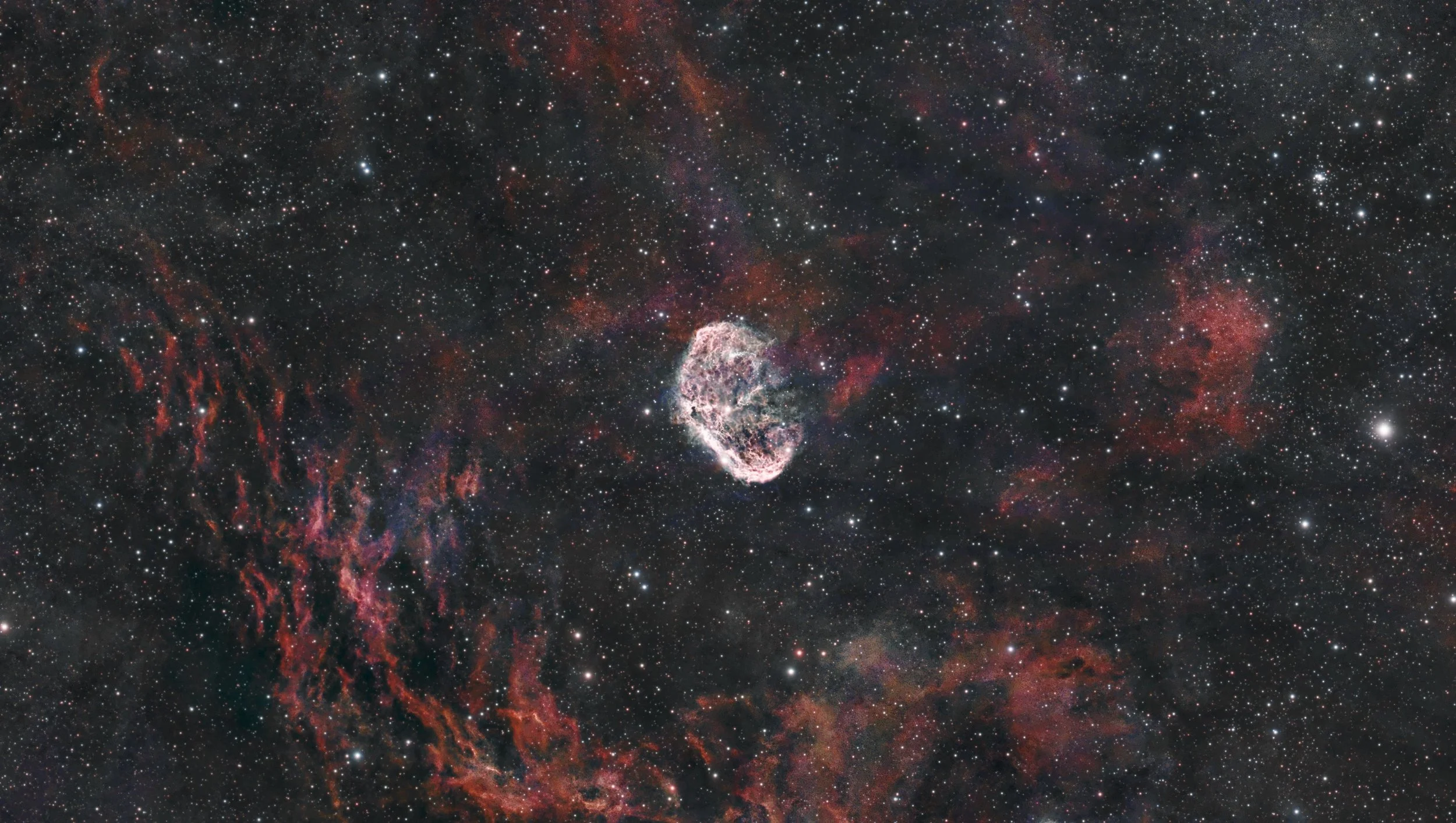
NGC 6888, commonly known as the Crescent Nebula, is an emission nebula located in the constellation Cygnus, approximately 5,000 light-years from Earth. The nebula is powered by WR 136, a hot, massive Wolf-Rayet star at its centre, whose fast stellar wind (traveling at ~1,700 km/s) collides with slower, previously ejected material, creating an inward-moving shockwave that heats the gas and causes it to glow.
NGC 6888 – Quick facts:
Type: Emission nebula (HII region), not a supernova remnant.
Apparent Magnitude: +7.4, though it has low surface brightness requiring filters for observation.
Size: Spans ~25–26 light-years across.
Discovery: Found by William Herschel on December 15, 1792; initially described as a faint "milky ray" joining a double star.
Best Viewing: Visible from northern latitudes between July and September; requires a telescope with at least 200mm (8-inch) aperture and a UHC or OIII filter.
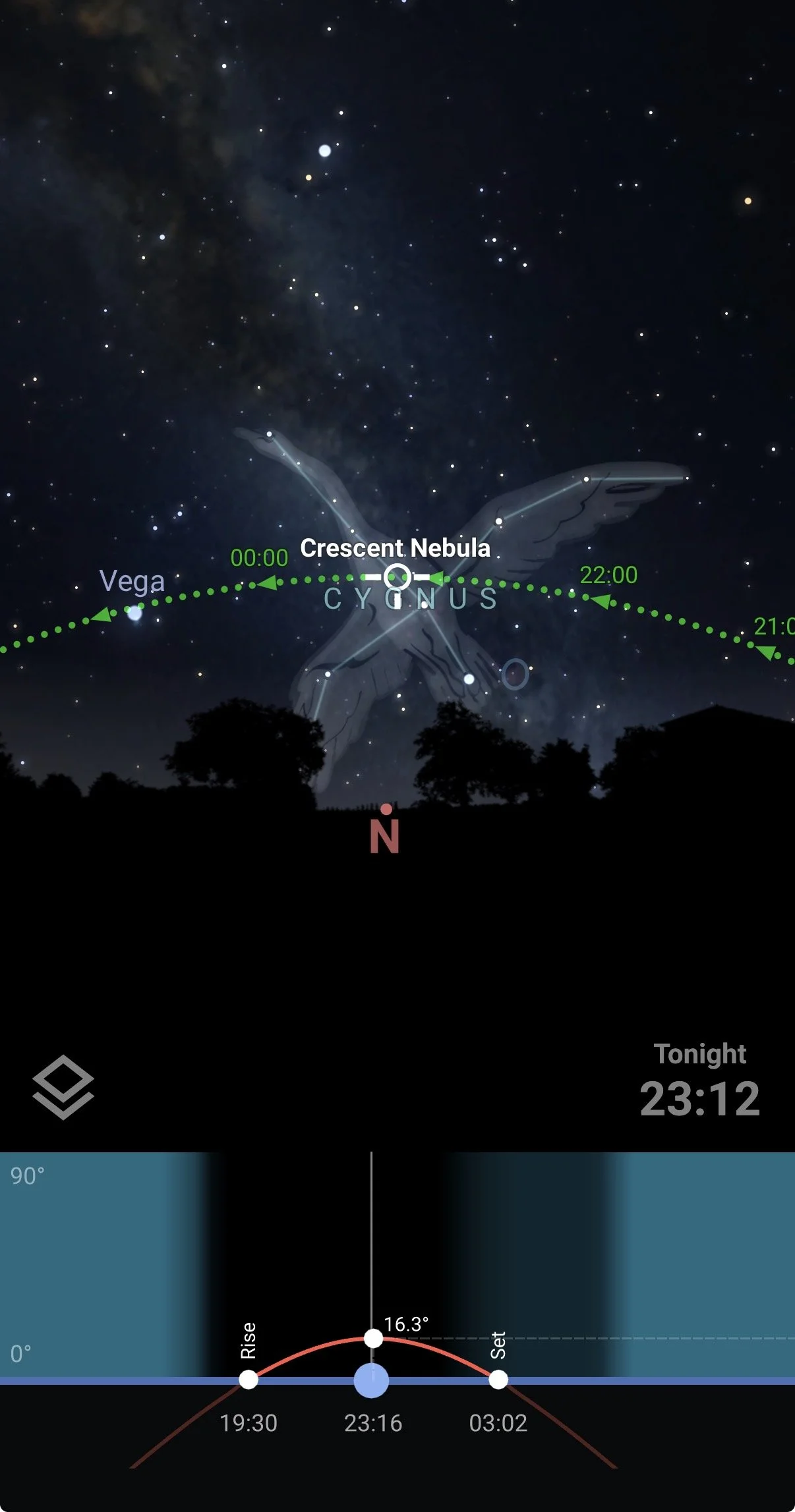
This was a particularly difficult target, even more so than the previous Veil Nebula. The target is so far north that it falls below the recommended 20º minimum on the Vespera II telescope when viewed from the ACT in Australia.
Each night, I would climb the ladder to place the Vespera on the roof for a meagre 90 minute capture at best. The entire observation took almost 24 hours and shows a few weeks’ worth of work.